Farm

Rotational grazing for sheep: reviving an ancient grazing approach
Did you know that our dairy farm also has a flock of 120 sheep? The mix of mules, which are a cross between Swaledales and Bluefaced Leicesters, and recently-introduced Highlanders, benefit from our farm-wide practice of rotational grazing. Rotational grazing for sheep makes the health of the animals and the land they graze joint priorities.…
Read More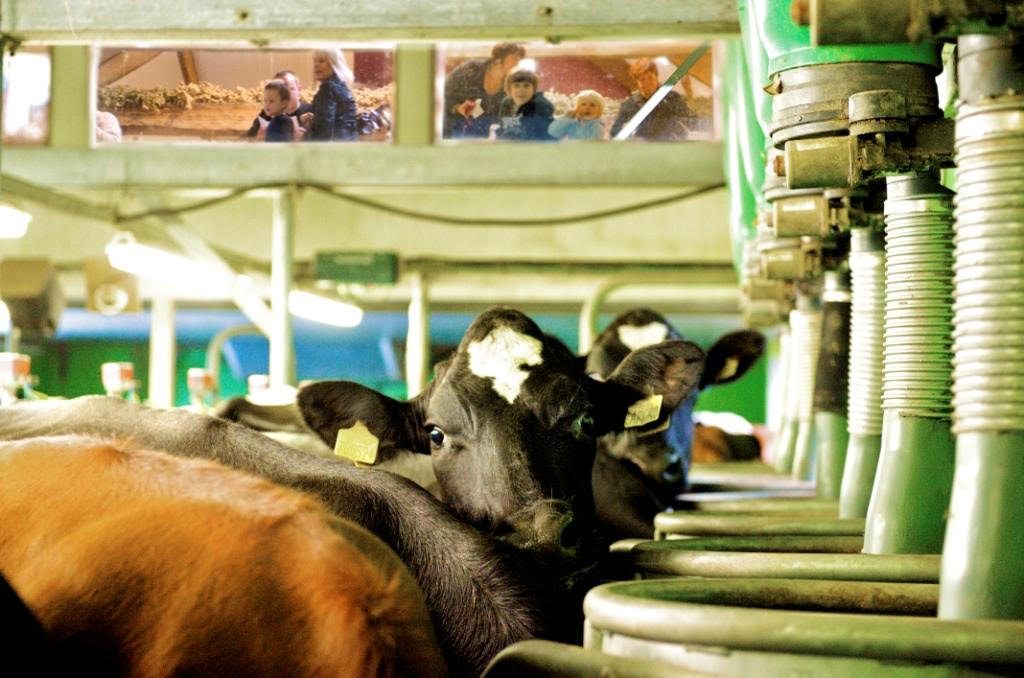
From udder to glass – what goes into a pint of Low Sizergh’s raw milk?
Our cows produce over 1 million litres of delicious, fresh UK raw milk per year. The selling of our raw milk harks back to a tradition that began with our great-grandfather who took the farm’s milk by cart to nearby Kendal. We believe that our raw milk is exactly how milk should be – creamy,…
Read More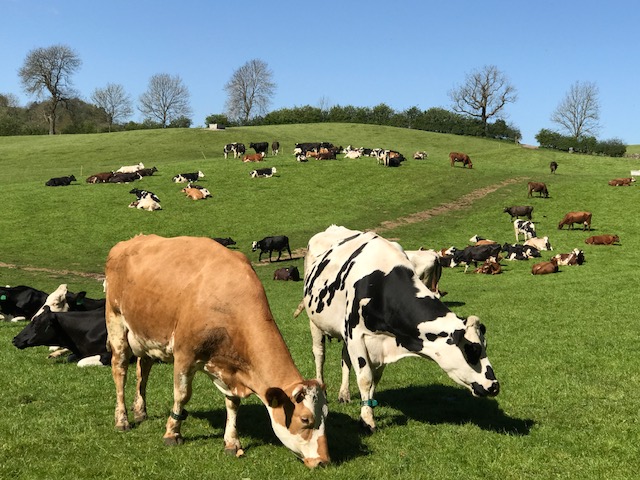
Back to organic: the organic dairy herd at Low Sizergh Farm
As of September 1st, Low Sizergh Farm will be fully reconverted to organic standards. This means our raw milk will be organic raw milk and our family dairy farm will be an organic family dairy farm. We originally moved away from organic in 2010 because the market was oversaturated and the price of organic milk…
Read More
Low Sizergh’s secret to delicious, fresh eggs
Low Sizergh Farm is a family dairy farm where the health of the land is looked after as carefully as that of the animals, which ensures that everything we produce is of the highest quality. As part of our wider holistic farming initiative, we recently adopted the pastured egg scheme, which is the secret to…
Read More
The secrets of silaging
For a good silage crop that will feed the cows through winter, when they are housed under cover, we need the right balance of grass quantity and quality. It can be quite delicate as the grass deteriorates once it gets beyond the optimal growth rate and starts to go to seed. Silage made from grass…
Read More
Cow breeding
As most people are aware a cow on a dairy farm produces milk because she has a calf every year. The 6 cows still left to calve this year are right at the end of the calving pattern. In 2013 we’re aiming for all the cows to calve in 9 weeks rather than 12. It’s…
Read More
Tupping time
The tups have gone in with sheep. The cross breeding is carefully managed and this year we’ve bought an additional Charollais tup. He is what’s known as a terminal sire – when crossed with our North Country Mules the resulting lambs will go for meat. Our other tup is a blue faced Leicester. He breeds…
Read More
Dairy farmer unrest
There are a lot of raised voices as dairy farmers react to news from their milk buyers that the milk price is to be cut again. It takes some mind bending to grasp the fact that in the world of milk the buyer dictates what they will pay even when — as in the case…
Read More
Cross Breeding
This Swedish Red cow was spruced up (using warm water!) for yesterday’s Bentham Auction Mart milk cow sale. Our herd is a mix of breeds, mainly Holstein, Swedish Red and Montbeliard. I choose across dairy breeds for characteristics like long life, good pregnancy rates, high milk production and good general health. Taking advantage of hybrid…
Read More
An Inspector calls
We had a bit of a tidy for today’s farm assurance inspection. The dairy that buys our milk subscribes to the Red Tractor mark – the farm assurance scheme that shows a food product meets specific animal welfare and quality standards, so it’s important that we meet the criteria.The inspector looked at our animals and…
Read More