
Farm trail
Our farm trail starts just outside the late 17th-century Westmorland stone barn, which houses the farm shop and café. En route, you’ll see where your food comes from—passing the cows in the fields, the vegetable plots at Growing Well, and the fruit trees in the orchard.
There is a huge variety of plant, animal, and bird life here at Low Sizergh, which changes with the seasons and coexists with the livestock. As you walk the trail, which is just under two miles, you’ll learn more about how our organic and regenerative farming principles are put into practice around this beautiful farm.
The farm trail is free of charge.
Puddlebrush Trail
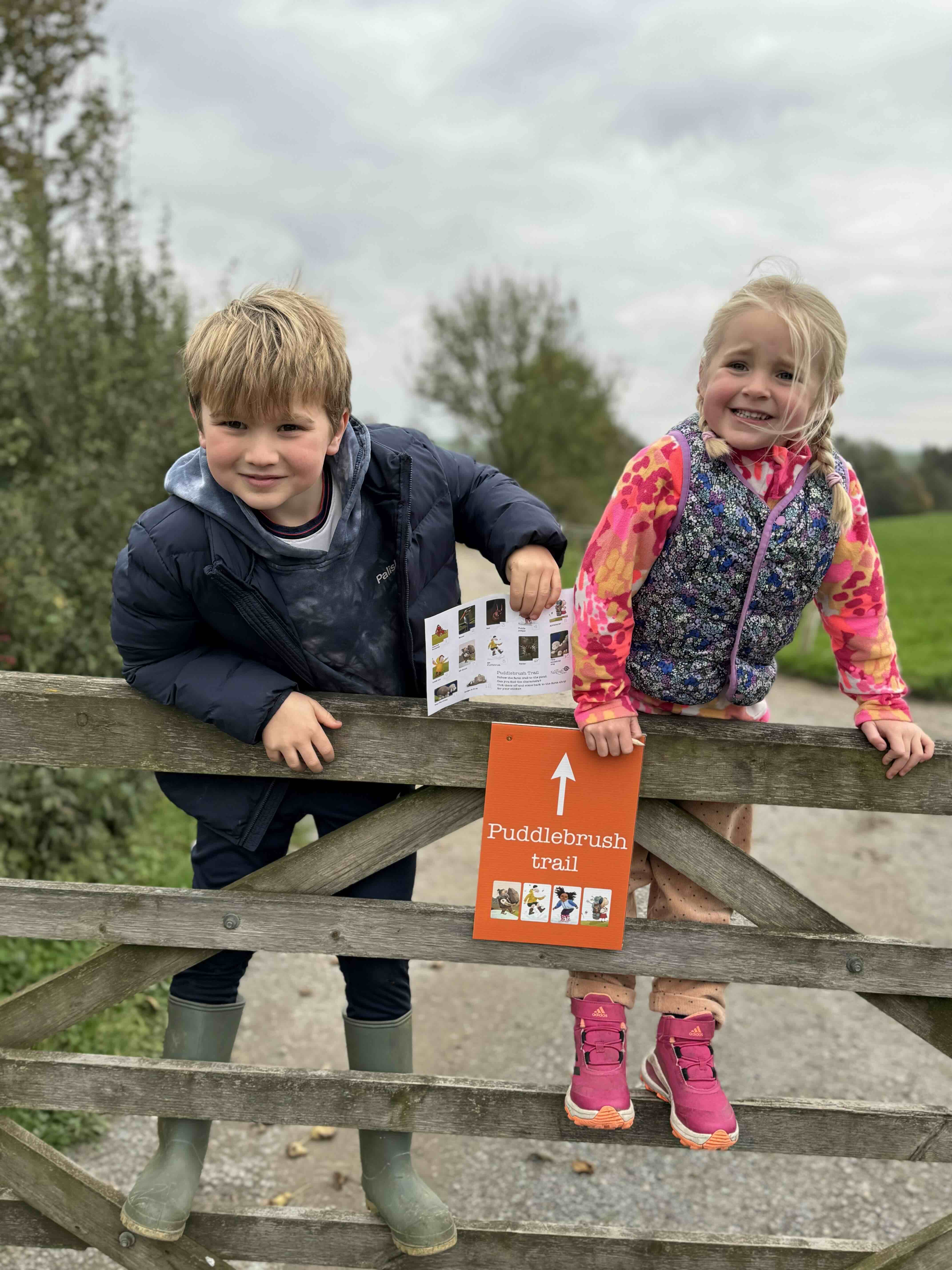
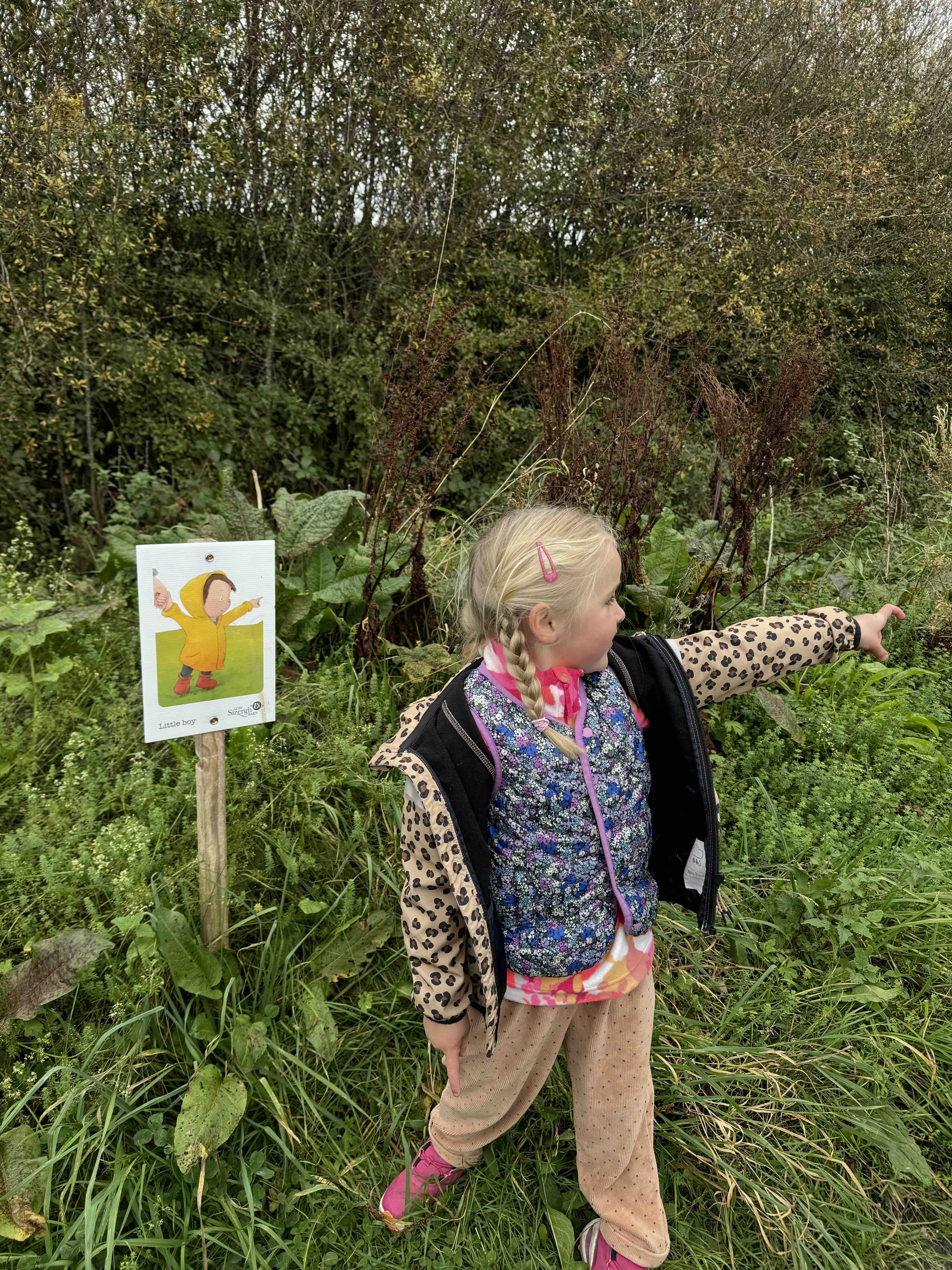
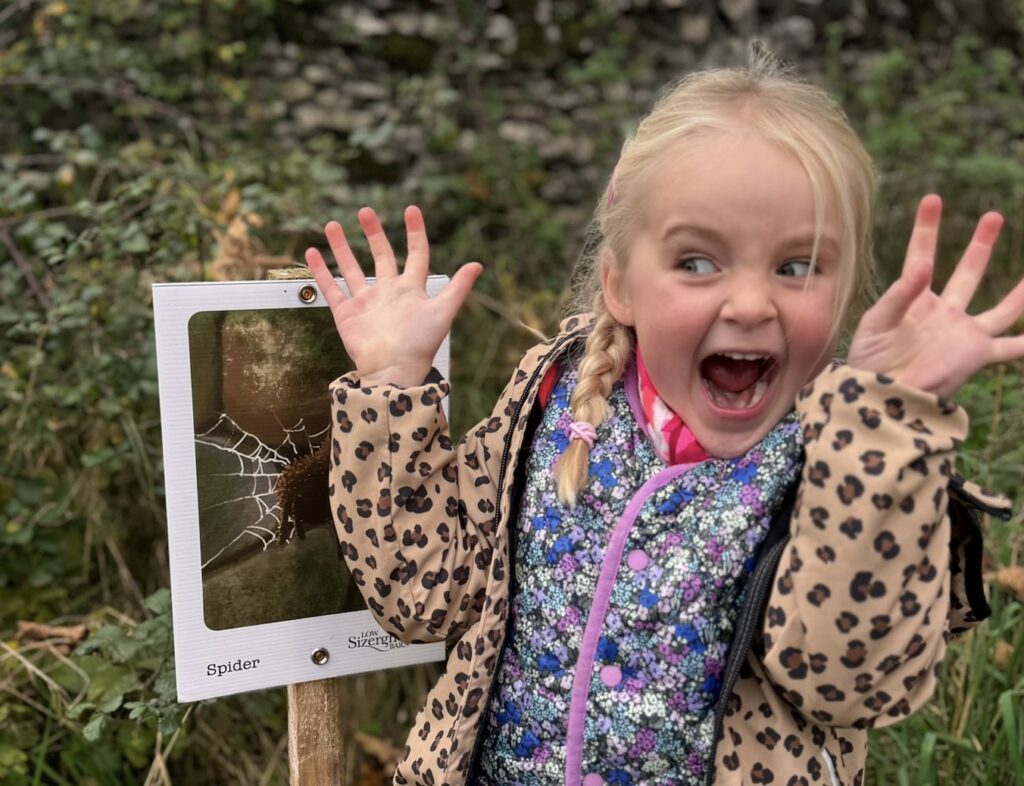
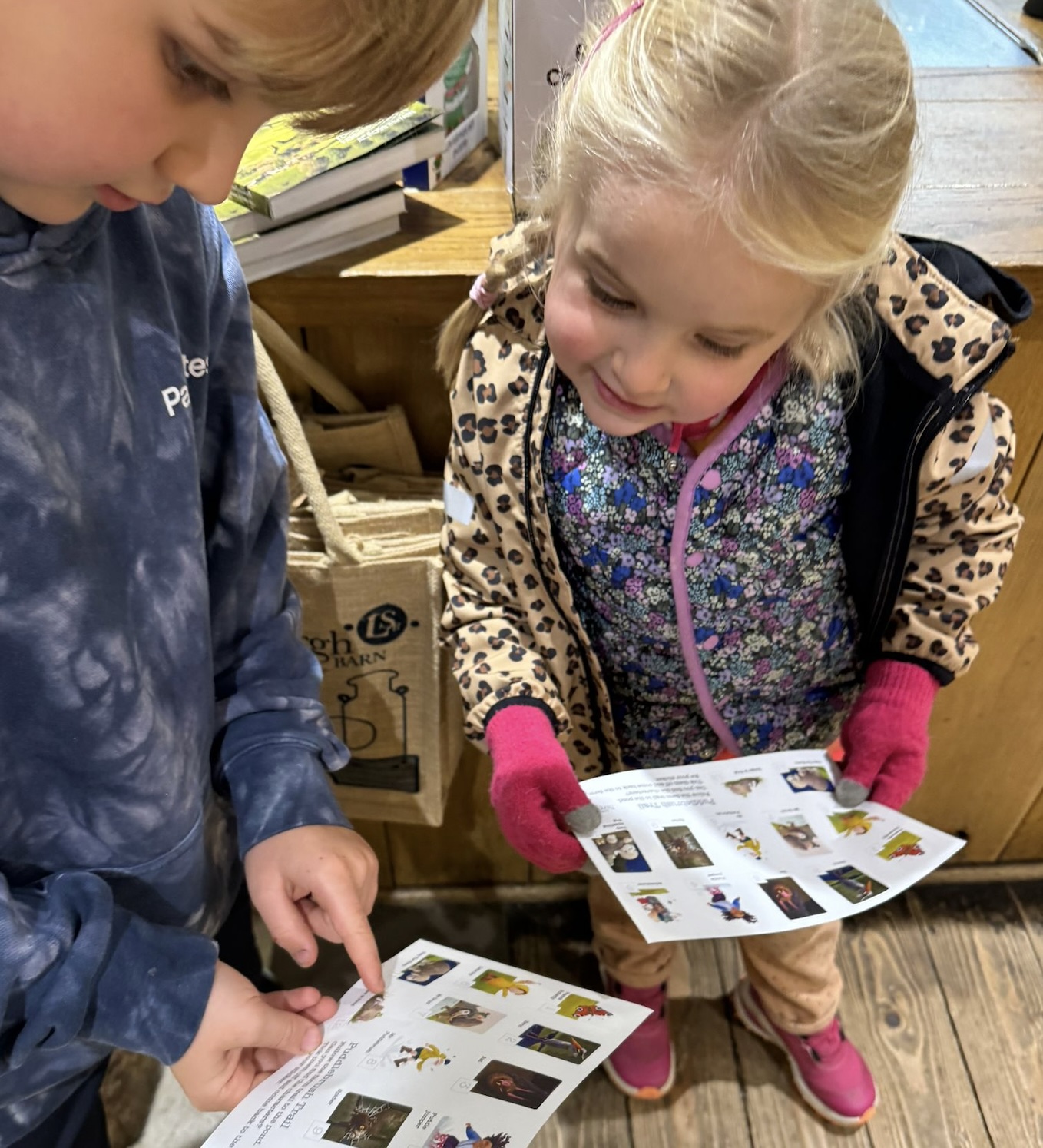
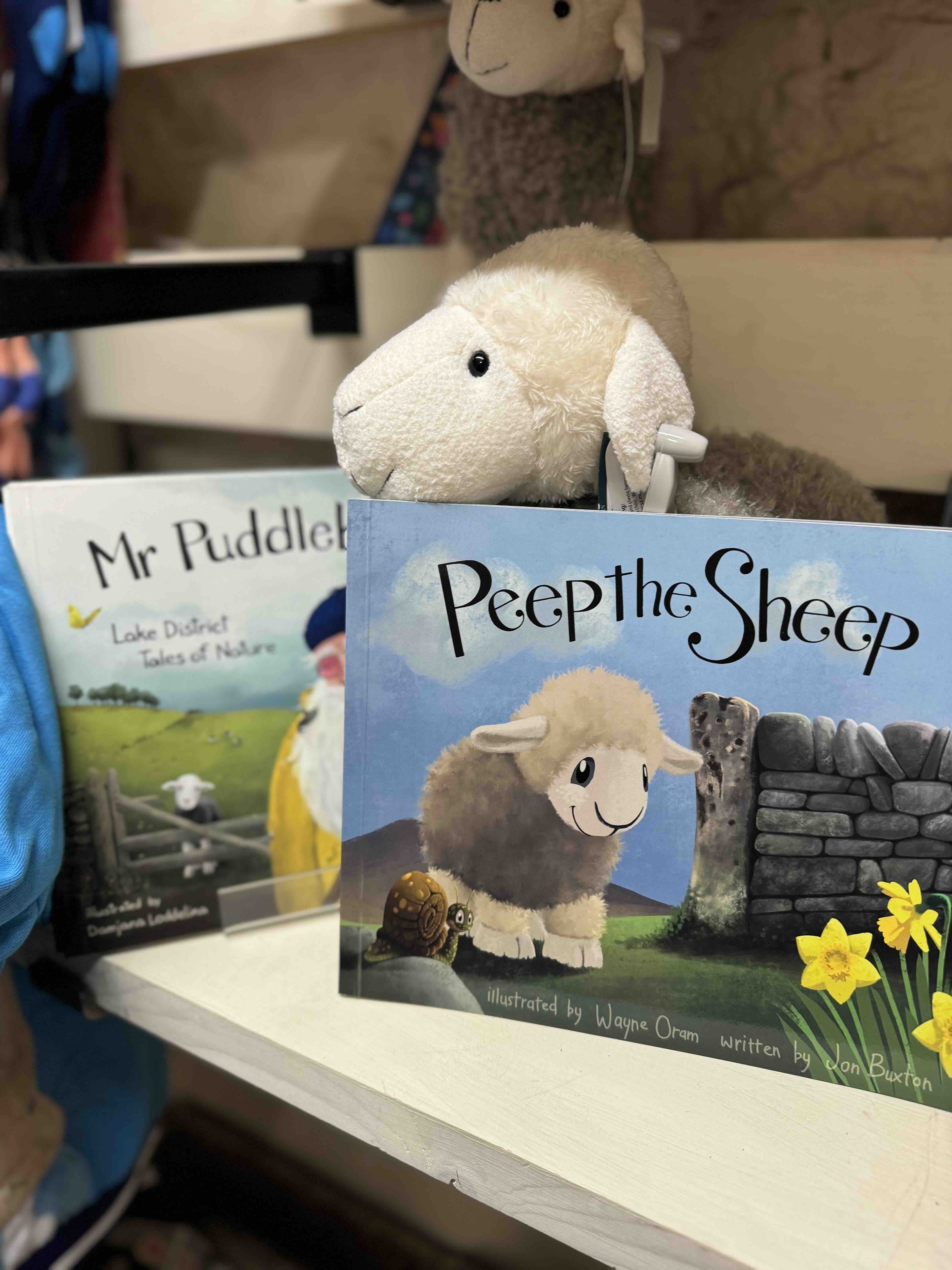
A free spotting activity for pre-schoolers and their big people is available on the farm trail. Characters from local independent publisher Puddlebrush Books, are waiting to be found.
Pick up a sheet from the farm shop and find the 12 characters from Peep the Sheep, The Grunts and Mr Puddlebrush books on the boards as far as the pond (½ mile). Return to the farm shop to collect a sticker reward.
What might you see?
Ancient hedgerow
The hedgerows on the first part of the trail are up to 400 years old and contain many species of wild plant. The hedges on the farm are managed on a 10-12 year cycle of cutting and laying in the Lancashire and Westmorland style. Hedgelaying is part of the farm routine for farmers Richard, Paul, Matthew & Charlie between November and late February. Hedges provide habitat for birds and insects and sheltered corridors along which small mammals travel.
Ancient woodland
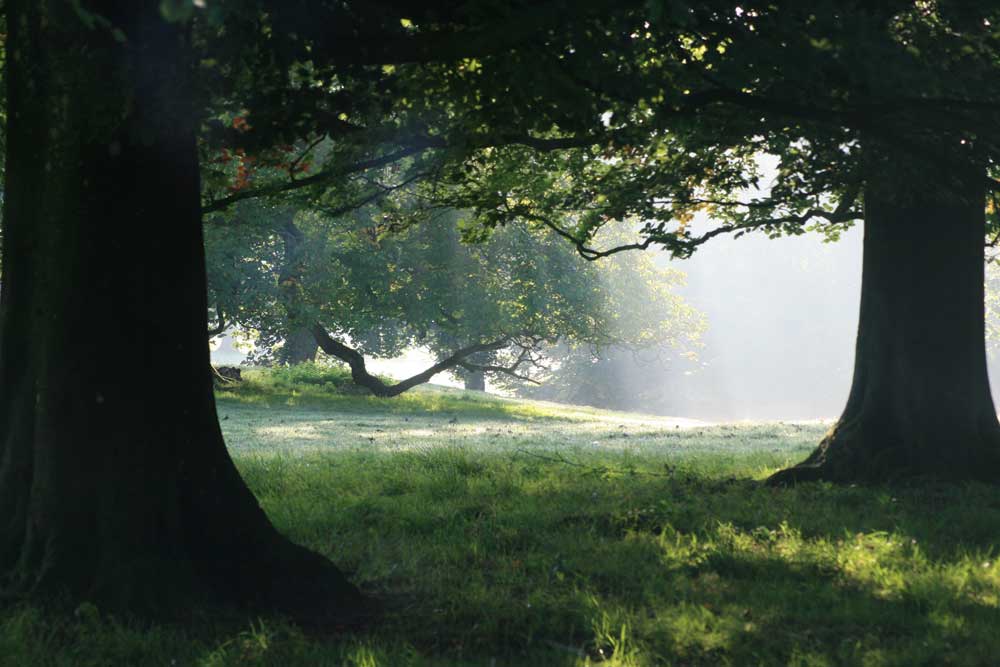
Th wood is called Low Park Wood and much of it was ‘coppiced’ until the 1930s. Coppicing is the traditional art of cutting back re-growth from tree stumps (or stools) at regular intervals to produce straight poles.
The woodland contains some magnificent mature oak trees. Some of the branches are dying off but these are left on the tree to provide wildlife habitats. Dead wood is an important food source for many insects and provides nest sites for birds.
As farmers we rely on natural predators that live in trees like this for help. The predators, such as birds and bats, feed on insect pests that can damage crops.
Dairy cows
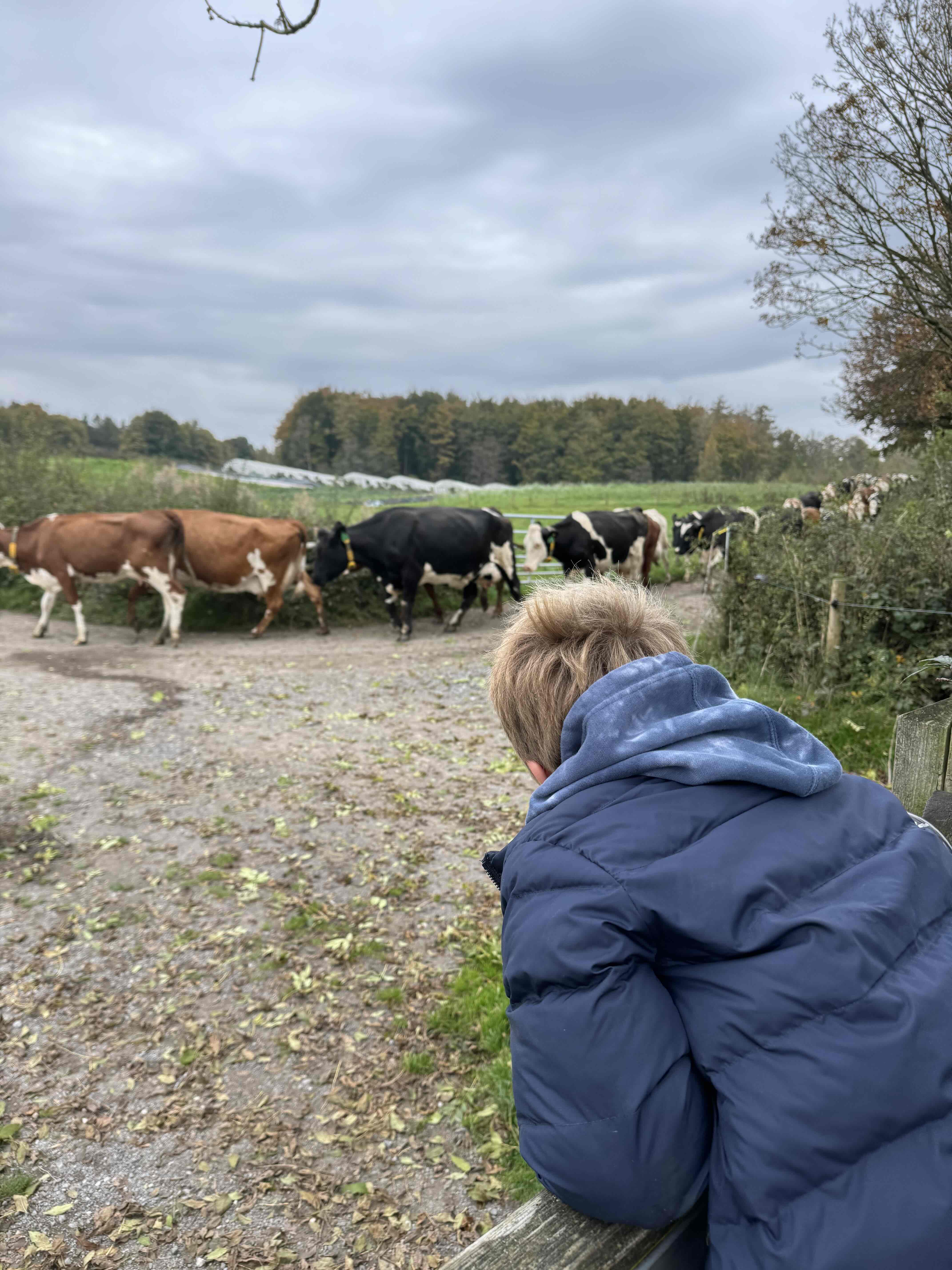
The farm has 130 Holstein, Montbelliard and Swedish Red dairy cows. They are milked twice a day in the parlour and you can see this taking place from the cafe’s viewing gallery at 3.30pm every afternoon.
Stone walls
A traditional feature of the area, these were built in the early 1800s. The outer stones enclose a centre of rubble, capped with top stones called ‘cams’. They provide habitat for lichens, lizards and ladybirds.